
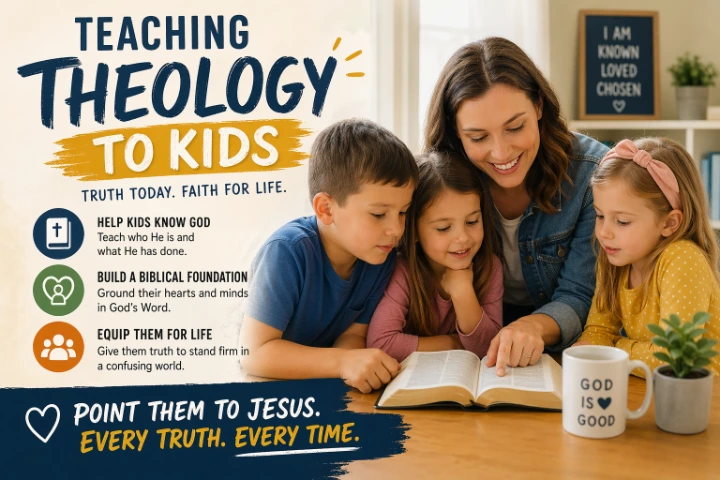
Teaching Theology to Kids Starts with Simplicity, Not Complexity
When people hear the word theology, they often think of seminary classrooms, deep doctrines, and complicated language. But theology simply means knowing God.
And kids are more than capable of that.
In fact, children are forming their understanding of God every day—through what they hear, what they experience, and what they are taught. The question isn’t if kids are learning theology. It’s what kind of theology they are learning.
That’s why intentional, biblical teaching matters.
Why Teaching Theology to Kids Is So Important
Children are not just future disciples—they are disciples right now.
If we wait until they’re older to introduce deeper truths about God, identity, sin, and grace, we miss a critical window where their worldview is being shaped.
Teaching theology to kids helps them:
- Understand who God is (His character and nature)
- Recognize who they are in Christ
- Develop a biblical framework for truth and decision-making
- Stand firm in a culture filled with confusion
- Build a faith that lasts beyond childhood
Simply put, theology gives kids roots—not just rules.

What Theology Looks Like at a Child’s Level
You don’t need big words to teach big truth.
The goal isn’t to impress kids with information—it’s to ground them in truth they can understand and live.
Here’s what that can look like:
- God is Creator → “God made everything, including you, on purpose.”
- God is Holy → “God is perfect and always right.”
- Sin is real → “We all choose our own way instead of God’s way.”
- Jesus saves → “Jesus came to rescue us and bring us back to God.”
- Identity in Christ → “If you trust Jesus, you belong to Him.”
Clear. Simple. Foundational.

Practical Ways to Teach Theology to Kids
1. Start with Scripture, Not Opinion
Let the Bible be the foundation. Even young children can engage with Scripture when it’s explained clearly and consistently.
2. Use Questions to Build Understanding
Instead of only telling, ask:
- “What does this show us about God?”
- “What does this mean for us?”
Questions help kids process truth, not just hear it.
VBS IDEAS FOR SMALL CHURCHES
3. Connect Truth to Real Life
Kids need to see that theology isn’t abstract—it’s personal.
- When they’re afraid → God is present
- When they fail → God offers grace
- When they’re unsure → God provides truth
4. Repeat Core Truths Often
Theology is built through repetition. The same truths, reinforced over time, shape lasting belief.
5. Model It Before You Teach It
Kids learn as much from what they see as what they hear. A lived-out faith reinforces every theological truth you teach.
Common Mistakes to Avoid
- Overcomplicating truth instead of simplifying it
- Focusing only on behavior instead of identity and heart
- Teaching stories without pointing to Jesus
- Assuming kids “aren’t ready” for deeper truth
Kids don’t need watered-down theology—they need clear theology.
Building a Biblical Foundation That Lasts
Teaching theology to kids is not about creating mini Bible scholars.
It’s about forming young hearts and minds to know God, trust His Word, and follow Jesus in a real and lasting way.
When kids understand:
- who God is
- who they are
- and what Jesus has done
…they are far more equipped to navigate life with confidence, clarity, and faith.